
Tempe
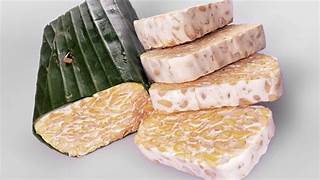
is a traditional Indonesian food made from fermented soybeans. It originated in Java and has been a part of the local diet for centuries. Tempe is well known for its high nutritional value, being rich in protein, fiber, calcium, iron, and B vitamins. These nutrients make it a healthy alternative to meat, especially for vegetarians and vegans. It has a firm texture and a slightly nutty flavor, with visible soybean pieces held together by white mold from the fermentation process.
The production of tempe involves soaking and boiling soybeans, then adding a fungus called Rhizopus oligosporus to start the fermentation. The mixture is left for 24 to 48 hours until it forms a solid, cake-like block. Tempe can be cooked in many ways, such as frying, steaming, grilling, or adding to soups and stir-fries. Some popular Indonesian tempe dishes include tempe goreng (fried tempe), tempe bacem (sweet marinated tempe), and tempe mendoan (lightly battered and fried tempe). In addition to its delicious taste, tempe is widely available and affordable, making it a favorite food across Indonesia.
Report Text: Tempe
1. General Classification
Tempe is a traditional Indonesian food made from fermented soybeans. It is widely consumed across Indonesia and has gained popularity in other countries due to its nutritional value and unique taste. Tempe is known for being rich in protein, fiber, and vitamins, making it a healthy alternative to meat for vegetarians and vegans.
2. Description
● Origin and History:
Tempe originated in Java, Indonesia, and has been part of the local diet for centuries. It is traditionally wrapped in banana leaves and sold in local markets.
● Production Process:
The main ingredient of tempe is soybeans. These are soaked, dehulled, and boiled before being inoculated with a fungus called Rhizopus oligosporus. The mixture is then left to ferment for 24 to 48 hours, forming a compact cake-like product.
● Appearance and Texture:
Tempe has a firm texture and a nutty flavor. It appears as a white block with visible soybean pieces bound together by the mycelium of the fungus.
● Nutritional Value:
Tempe is high in protein, low in fat, and contains essential amino acids. It also provides calcium, iron, and B vitamins, making it beneficial for bone health and energy production.
● Culinary Uses:
Tempe can be fried, steamed, grilled, or used in soups and stews. Popular dishes include tempe goreng, tempe bacem, and tempe mendoan.