
Fermented Cassava
General Classification
Fermentation is a biological process where microorganisms such as bacteria and yeast break down organic substances like sugars into simpler products, including organic acids, gases, and alcohol, in the absence of oxygen. One example of this process is the production of fermented cassava, commonly called tape singkong in Indonesia. This traditional food is made using yeast that contains microorganisms such as Saccharomyces cerevisiae. Fermentation in cassava is significant because it changes starch into glucose and produces alcohol, as well as a distinctive flavor.
Description
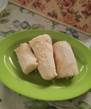
Tape singkong is well known as a popular traditional snack in many regions of Indonesia. It usually has a soft texture, a sweet taste, and sometimes a slightly sour flavor. The process of making tape singkong is started by peeling and washing cassava, and then cutting it into smaller pieces. After that, the cassava is steamed until it becomes soft. Once it is cooked, the cassava is left to cool down. Then, the cassava is sprinkled with yeast evenly. Afterward, it is arranged in a container lined with banana leaves and covered tightly. The container is kept closed to make sure the condition is airtight, so the fermentation process can run well. During this stage, enzymes from the yeast break down starch into simpler compounds. As a result, the cassava becomes soft, sweet, and aromatic. Tape singkong can be eaten directly as a snack or used as an ingredient in cakes and beverages. This product shows the application of conventional biotechnology in everyday life.